Growing High-Performing Schools and Happy, Healthy Children
By Stephanie Tonnesen Hornback
“This is how change happens.
One person at a time, one community at a time, Green Bronx Machine is changing the way children eat, learn, and live!”
– Reverend Al Sharpton
The Challenge
In the world of education, we often obsess over digital literacy, standardized testing, and the latest classroom tech. But in the heart of the South Bronx, Stephen Ritz—the “Chief Eternal Optimist” of Green Bronx Machine—is proving that the most transformative school supply on Earth isn’t found in a backpack or a classroom. It’s found on a plate.
Hunger: The Invisible Barrier
New York City’s South Bronx is a study in staggering contradictions. It beats as a vibrant cultural heart within one of the wealthiest cities on the planet, yet it is one of the most food-insecure communities in the United States. In a landscape where “99-cent menus” and bulletproof glass often stand between a child and their next meal, the local environment can be a fortress against both health and learning.
The statistics are sobering: nearly 40% of Bronx residents face food insecurity and the highest rates of diet-related diseases and persistent inter-generational poverty. Ranked 62nd of 62 counties in New York in health outcomes for 10 consecutive years by the Robert Wood Johnson Foundation, the Bronx has some of the poorest-performing schools and lowest graduation rates, and the highest rates of diet-related diseases, childhood homelessness, and youth unemployment in all of NYC.
When a child is hungry, the impact ripples far beyond an empty stomach; it manifests as delayed development, fractured cognitive function, behavioral issues, and plummeting attendance. We cannot expect a child to hunger for knowledge or reach their potential if they are physically, fundamentally, hungry. As Ritz explained, “Children will never be well read if they are not well fed.”
The Machine That Grows Hope
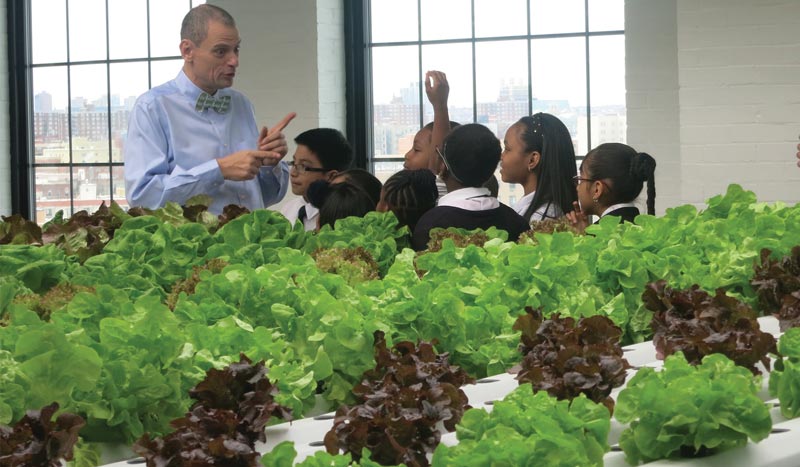
Enter Green Bronx Machine. Founded in 2011 by Ritz and his wife Lizette, Green Bronx Machine isn’t just a classroom gardening program—it is a pedagogical uprising. It is rooted in a simple, but radical premise: If you want to grow high-performing students, you must first grow healthy ones. Transforming classrooms into “edible laboratories,” Green Bronx Machine uses student-led urban agriculture to turn the tide of “zip code destiny.”
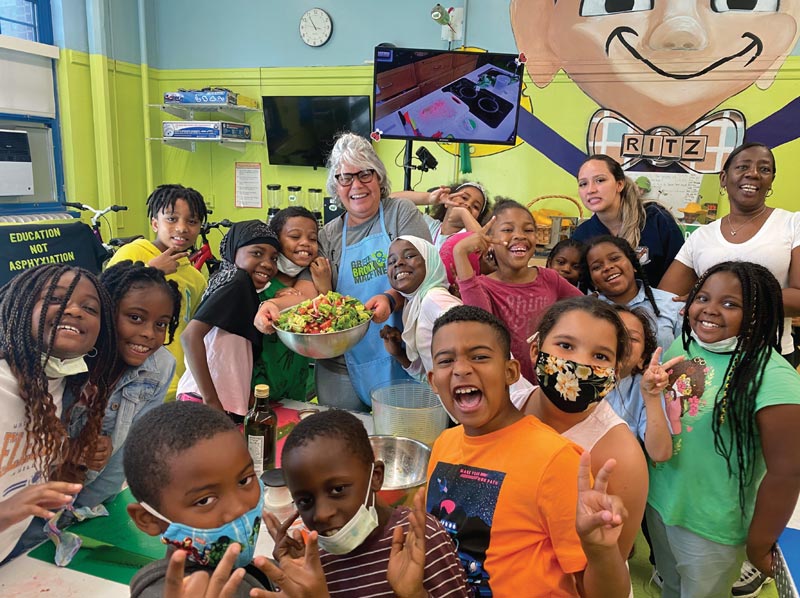
Wrapping all subject areas around growing food, Green Bronx Machine focuses on:
• Academic Engagement: Math, science, and literacy come alive through the daily study and maintenance of indoor farms.
• Health Outcomes: Students move from passive consumers to active producers, directly combating childhood obesity and diabetes with the produce they grow and eat.
• Community Resilience: By building local food systems that feed families, the program creates direct pathways to 21st-century “green” careers and fosters understanding of what it means to be a good neighbor.
Cultivating Possibilities
It all started in a locked basement classroom where Stephen Ritz was charged with teaching 17 over-age and under-credited adjudicated youth in a high school with a 17% graduation rate. The radiator hissed, the linoleum was worn thin, and a forgotten box of “onions” bloomed into bright yellow daffodils. Green Bronx Machine was born from a collaborative spark between Ritz and those students, who collectively observed a troubling systemic behavioral correlation: When student waistlines expanded, school engagement, social cohesion, and ambition began to wither.
Urged to keep his students out of the school building as much as possible and fully aware that these students had community service requirements to fulfill, Ritz and students traveled the Bronx doing high-profile landscape and community clean-up projects and became adept community gardeners. This community engagement morphed into living wage, entry-level, skilled employment opportunities and improved graduation rates. Along the way, Ritz and his students were invited by Whole Foods to sell their locally grown produce. No longer just planting seeds, these students were cultivating a money-making opportunity.
Cory is one of those students. Raised by his grandmother and the first in his family to graduate high school, he credits the skills he learned with Ritz for his professional success. With multiple industry certifications, he now works for the NYC Department of Education Office of School Nutrition and as a city-wide site tech for Green Bronx Machine. Ritz proudly states: “He’s an organically grown citizen.”
What began as a gritty intervention for “at-risk” high schoolers has since blossomed into a sophisticated, K-12+ education engine. So much more than an “add-on” program, Green Bronx Machine is a comprehensive, standards-based ecosystem integrated into the very marrow of the school day.
From Unused Libraries to Living Laboratories
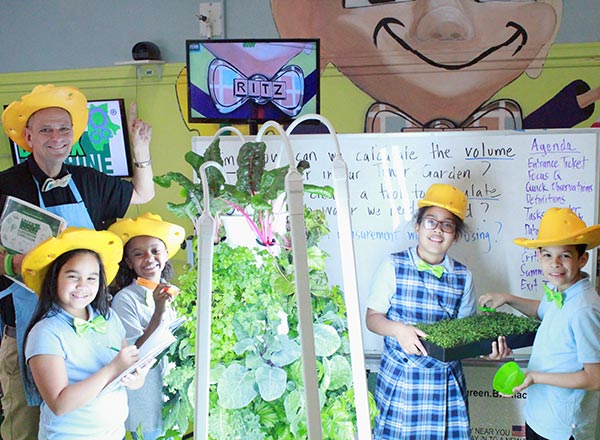
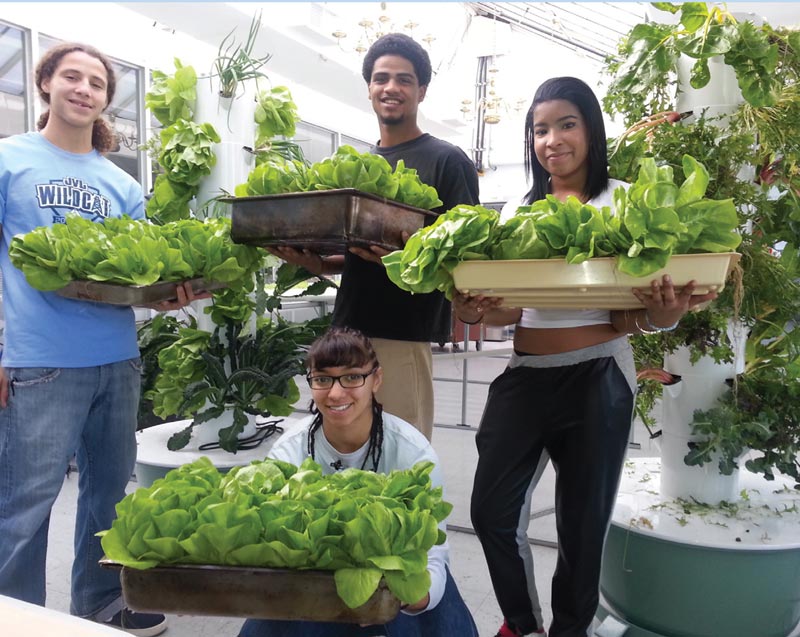
This transformation is most visible at Community School 55 (CS 55), located in the center of the largest tract of public housing in the South Bronx. In 2015, Ritz single-handedly repurposed an underutilized school library into the National Health, Wellness, and Learning Center. The facility serves as a year-round child- and teacher-friendly “wonder-torium” and “edible laboratory,” featuring:
• Commercial Indoor Vertical Farming: A full-scale Tower Garden farm that students use to grow, analyze, and harvest vegetables all year round.
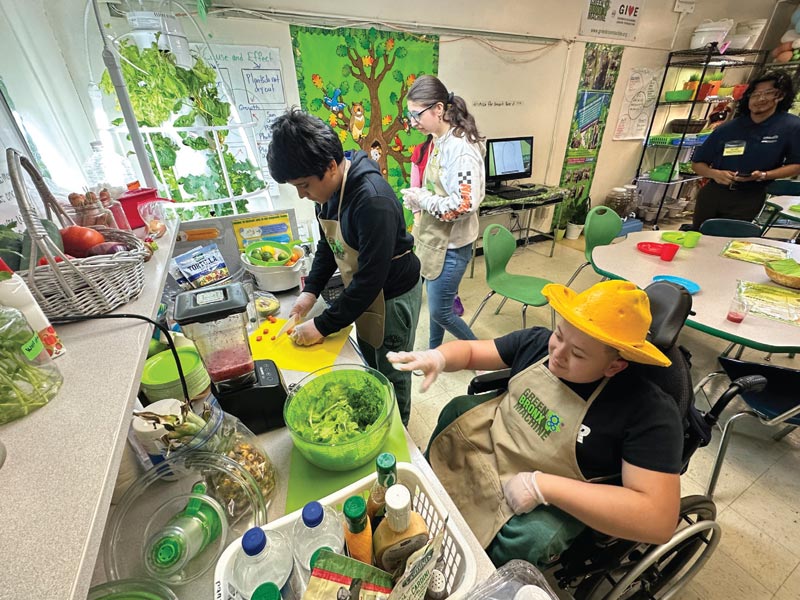
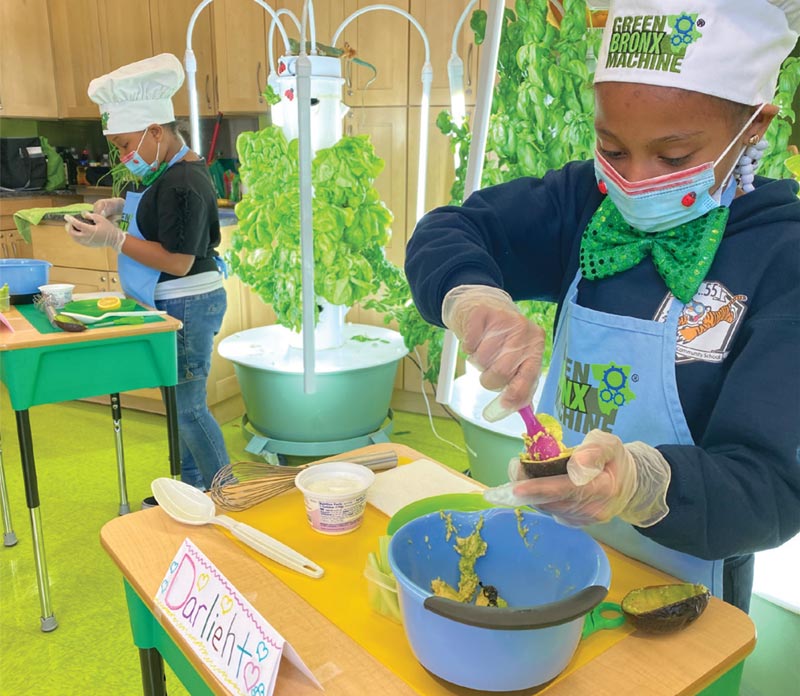
• A Mobile Classroom Culinary Training Kitchen: Where students learn to process and prepare the very food they grow.
• A Communal Space: Open during evenings and weekends, educators receive professional development and parents congregate and cook together.
In its inaugural year at CS 55, behavioral incidents plummeted by 50% and daily attendance in targeted classrooms surged to 94%. In its second year, the program drove a 45% increase in passing rates on NYS Science exams. By the third year, the school achieved “proficient and well-developed” in all 10 assessment areas of school performance. Today, CS 55 outperforms citywide and statewide norms.
Across the country, students aren’t just growing kale, basil, and strawberries; they are cultivating a new future and proving what is possible. Yomeris, one of the first CS 55 students in the program, illustrates the power of the program. The first in her family to graduate middle school, Yomeris is now an honors student attending a private high school on a complete scholarship. Her dream is to become a neo-natal pediatrician. According to Yomeris, “If not for Green Bronx Machine, I doubt I would have made it through high school.” She remains actively involved, working as a paid intern and serving as a role model for current students.
Spotlight: Beyond the Classroom
Green Bronx Machine’s impact does not stop at school gates. They work to ensure that the entire community is supported. This includes:
• Designing and supporting the nation’s first year-round, wheelchair-accessible urban farm and culinary prep kitchen specifically for schools serving students with special needs.
• Partnering with the New York City Housing Authority (NYCHA) to bring agriculture technology directly into public housing complexes.
• Growing fresh produce for local, recovering cancer patients with Memorial Sloan Kettering Hospital.
• Partnering with NYC Public Schools to create Green Bronx Machine Institute, with free, credit-bearing teacher training and professional develop-ment for all NYC teachers.
• Launching a collaboration with the NYS Department of Education to train principals statewide, creating a top-down leadership model that other states can replicate.
• Partnering with the Center for Integrated Teacher Education to design nationally recognized graduate and undergraduate credit-bearing coursework for teacher and administrative licensing.
Focused on execution over expansion and “determined to nail it before we scale it,” Ritz insists that “from our humble corner of the globe, we are determined to change the world, and we are the folks we are waiting for.”
Referred to as “A Miracle in the Bronx” by New York Weekly, the organization has grown far beyond its home neighborhood, bringing students from their Bronx greenhouse to the White House three times, and to the stages of WOBI’s World Business Forum, where they have received multiple standing ovations for their achievements. In the process, Green Bronx Machine is redefining public education, building a new narrative, and changing the trajectories of life for students.
“Green Bronx Machine is one of the most innovative, genuine, and tenacious education programs I have ever encountered,” said Nona Evans, former Executive Director, Whole Foods Foundation. “They are the kind of superheroes we need standing for our kids and their well-being. They use gardening to inspire and challenge kids in ways that transform their lives and communities.”
Adaptable, Replicable, Scalable
Green Bronx Machine’s vision is rooted in a global truth: There is a Bronx in every city. The challenges of food insecurity and educational disengagement are universal. By treating food as a fundamental human right and a powerful pedagogical tool, Ritz and team are proving that when you grow something greater, the whole world can bloom. This isn’t just about planting gardens; it is about rooting a standardized, turnkey movement. The organization aspires to impact 30,000 schools across the United States by 2030. To reach this milestone, Green Bronx Machine has devel-oped a replicable, scalable, and low-cost three-prong approach:
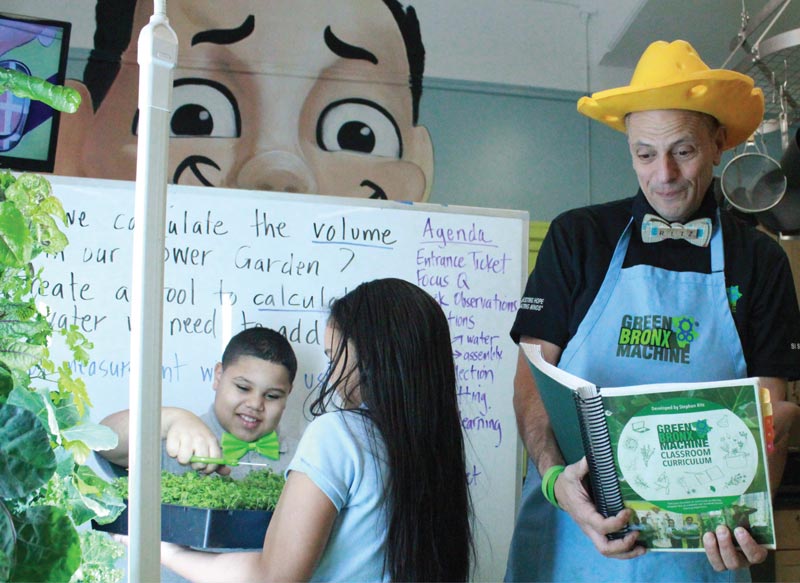
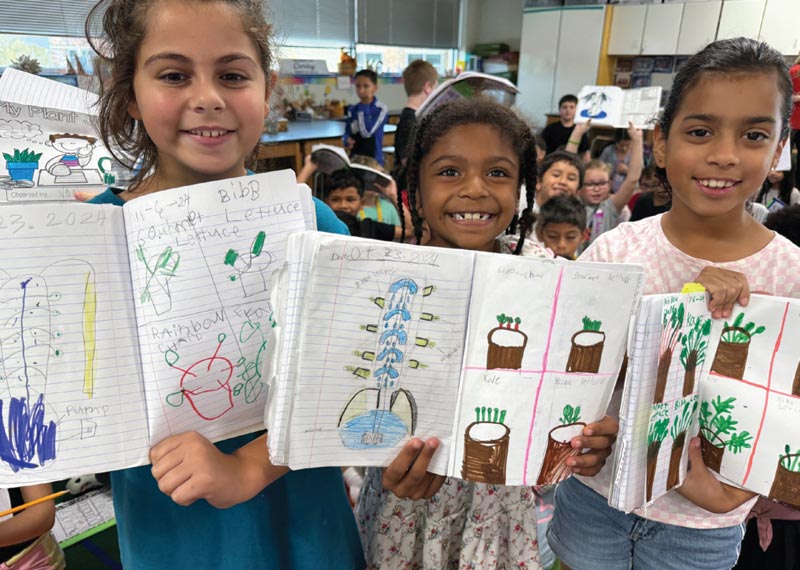
1. Curriculum & School Engagement: Named 2025 Teachers Choice and Best in STEM by We Are Teachers, Green Bronx Machine’s Classroom Curriculum is teacher-loved, administrator-lauded, student-centered, parent-accessible, and designed to work with Tower Garden indoor aeroponic gardens. These low-cost “classrooms on wheels” allow any school, in any state, to roll a high-tech garden and prep kitchen into a classroom.
2. Media & Digital Presence: Free, hands-on curriculum resources support daily subject-matter instruction, including downloadables, interactive trading cards, open-sourced teacher training videos, and compelling and rich video content for students and educators, with accompanying discussion and comprehension guides.
3. Community of Support: An entire ecosystem of local partnerships and corporate support, from robust, genuine partnerships that support multi-city expansion, to grant resources for educators and school administrators looking for funding. Green Bronx Machine also provides professional development and teacher training.
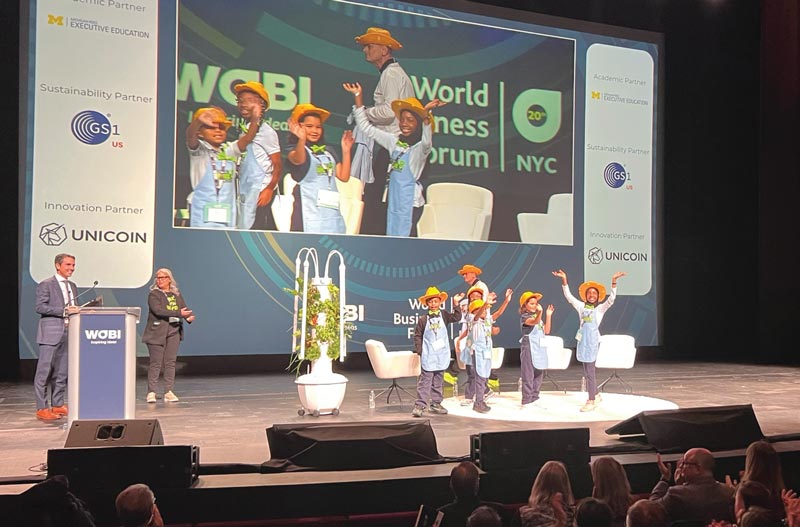
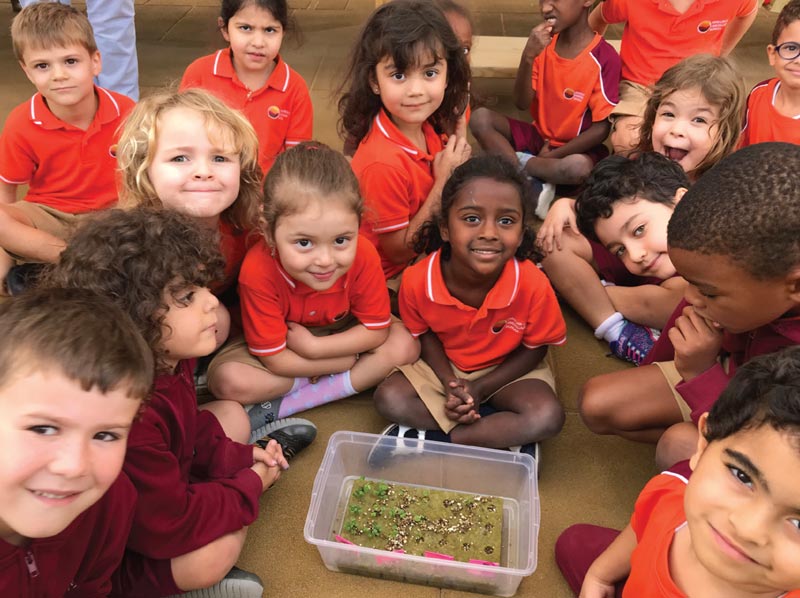
Simultaneously, Green Bronx Machine has expanded to hundreds of international schools, including International Baccalaureate alignment. Key hubs include:
• Canada: Green Bronx Machine has established “mini-centers” and a specialized version of its classroom curriculum tailored to provincial Canadian standards.
• The United Arab Emirates (Dubai): Consulting directly with schools to create state-of-the-art Wellness Centers and the Dubai International Food Safety Conference, Green Bronx Machine bridges public, private, health, hospitality, industry, and education sectors to inspire healthy living, healthy learning, a more vibrant landscape, 21st century opportunities, and a blueprint for high-tech, desert-proof agriculture.
• Italy: In a massive partnership with the Future Food Institute and UNESCO, Green Bronx Machine has helped launch programming in over 600 schools across Italy. This initiative uses the “edible classroom” to promote the Mediterranean Diet as a framework for cultural preservation and sustainable urban growth.
• Latin America: The program has debuted in several nations across the region, focusing on accessibility and community resilience.
• At COP 28 (the UN Climate Change Conference), the model was showcased as a viable strategy for building “climate-resilient” schools demonstrating how high-tech, low-water farming can provide a stable food source, employment, and innovation in regions where traditional agriculture is impossible.
Joel Makower, Chairman at Trellis Group, corporate sustainability strategist, and board member noted, “This is an example of what is possible when inspiration and innovation take on some of society’s thorniest challenges. Stephen and Lizette Ritz have catalyzed a revolution – and a revelation: That we can grow and educate healthy children, even in America’s most forgotten corners, and all around the world.”
Spotlight: Let’s Learn With Mister Ritz
Post-COVID, the organization spent two years decoding how children digest digital content. The result is the Let’s Learn with Mister Ritz web series. Launched in partnership with the NYC Department of Education and PBS, it provides teachers and children across the country with foundational lessons on science, sustainability, and healthy living. Now in its fourth season, with a dedicated Green Bronx Machine KIDS YouTube Channel, it is a fun, practical, content-rich, seed-to-harvest journey with Mister Ritz and his cast of characters and friends, voiced by his students.
An accompanying free resource, Let’s Learn Instructional Companion, features all-subject, standards-based content with age- and grade-appropriate assessments aligned to each episode. Critical social-emotional and health-related questions encourage collaboration, cooperation, dialogue, discussion, debate, and listening skills.
“Every school and every teacher can do this,” added Ritz. “Children seek to watch and share with their families at home, extending learning beyond the school day.”
Results That Speak for Themselves
From inner-city Baltimore to suburban Colorado, “living classrooms” solve one of the most difficult challenges in modern education: genuine student buy-in.
1. The “Hook” for Hard-to-Reach Students
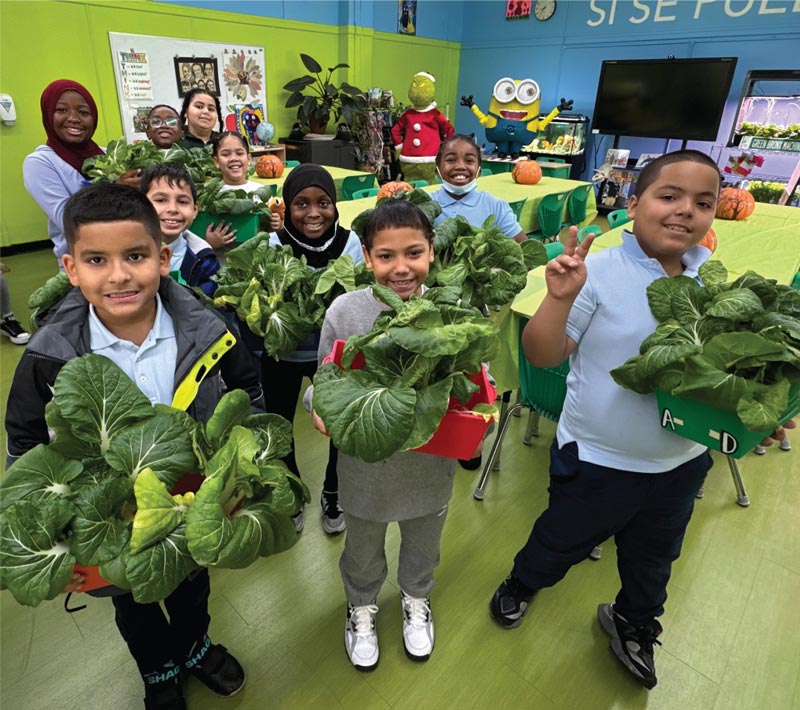
Many teachers report that Green Bronx Machine programming acts as an immediate “hook” for students who have struggled with traditional instruction and attendance. Teachers find the immersive curriculum reaches students who are often left behind by purely text-based instruction. In many classrooms, attendance rates have leaped from as low as 40% to over 90% and educators report a 50%reduction in behavioral incidents. One teacher noted that her students started showing “care and empathy, not only to their plants but with each other,” creating a collaborative environment she had previously struggled to build.
2. Sensory Literacy and “Visible Thinking”
Teachers highlight how the “trickling water, bright lights, and smells” engage sensory learners. Complex STEM concepts—like the pH of water or the chemistry of photosynthesis—become tangible rather than theoretical. Students calculate growth rates, ratios for nutrients, and harvest yields, and write “letters to their plants” or keep “growth journals,” giving them a reason to master descriptive language. One educator described the Tower Garden as a “living, respirating organism that’s always present,” allowing her to use it as a “reset” for students who finish work early or simply need a sensory break.
3. Behavioral and Health Ownership
Teachers report that students understand they can grow things and produce content and consumer products. They are now asking for seeds to take home as “homework.” The ripple effect of the classroom garden extends immediately into the school café; children advocate for salad bars, talk about food imprints and food miles with peers, and even introduce new healthy options to peers.
4. Professional Satisfaction and “Turnkey” Ease: The Un-To-Do List
Teaching in high-need schools/districts often leads to burnout, but educators report that Green Bronx Machine’s model revitalizes their own passion for the profession. Teachers often feel overwhelmed by new initiatives, but many report that the Green Bronx Machine curriculum actually saves time because it is “turnkey” and standards-aligned (including individual state alignments in Florida and Texas).
5. Taking it Home
For many parents, this isn’t just a school program—it’s a lifeline that has fundamentally altered their family’s relationship with food and health. Parents frequently express relief and amazement at the shift in their children’s eating habits. Instead of begging for chips or soda, children come home asking for Swiss chard and cucumbers because they grew them themselves. Parents have noted that the program’s culinary component encourages children to step into the kitchen. Families are now preparing meals together using recipes the students learned in their “edible laboratory.” One grandmother shared how grateful she is: “Green Bronx Machine has taught my granddaughter how to eat healthy food, how to cook healthy. She’s even taught the family about healthy foods. She tells me don’t eat this and don’t eat that and I listen to her because she’s right.”
Spotlight: Growing Hope in Appalachia
In the hills of West Virginia, Green Bronx Machine’s mission to transform “zip code destiny” found a powerful partnership with Stepping Stones, a residential foster care and behavioral health provider. In a region disproportionately impacted by the opioid crisis and limited economic opportunity, the Growing Hope Initiative has provided a lifeline for youth in the foster care system.
Working together since 2018, Green Bronx Machine and Stepping Stones established the first commercial greenhouse in America fully run by foster care youth. Located on a remote 166-acre campus deep in the mountains, the greenhouse provides horticultural therapy, team building, and fresh produce year-round. It was designed to serve as a dual-purpose engine:
• Workforce Development: Youth are trained as professional urban farmers, learning to manage commercial-scale systems, track data, and sell their harvest at local markets—earning their first “green” workforce development skills in the process.
• Nutritional Healing: In an area often categorized as a food desert, the program floods the community with healthy, fresh produce, donating excess harvest to local families in need.
After experiencing success and the psychological boost gained from being someone who provides aid rather than receiving it, many youths did not want to leave. Thus, Executive Director Susan Fry and Ritz began to explore The Growing Hope program as the heart of a larger Youth Transition Project. Using the greenhouse as the epicenter of employment, this innovative model sought to address the “aging out” crisis—where foster youth often face homelessness, unemployment, and worse after turning 18.
Using grant money, online crowd sourcing, and financial and media support from Newman’s Own Foundation, they created an eco-village of 10 completely furnished and outfitted tiny homes where young men (ages 16-21) live and work independently while receiving mentorship, life-skills training, and educational support for up to three years.
“Green Bronx Machine has been a catalyst in helping us to follow our passion and make dreams come true by pushing us to think outside of the box and literally feed our boys with hope,” says Fry. Together, they are planning to have the greenhouse supply ingredients for national brands interested in a cause-marketing campaign modeled after Newman’s Own, including a product line called “A Taste of Appalachia” that will provide permanent employment for graduates.
Ritz has even approached The Culinary Institute of America for support. Michiel Bakker, President of the institution stated, “This one solution addresses so many problems. I hope that Green Bronx Machine can scale across the US and everywhere there is a commitment to getting children to eat and access healthier food.”
Funding and Scaling the Impact
Scaling a non-profit in some of the most under-resourced communities in the world is a masterclass in creative capital and strategic partnerships. The challenge is building a self-sustaining ecosystem. Green Bronx Machine makes it “easy to say yes” for philanthropists, businesses, foundations, and donors alike. These models led to Green Bronx Machine being named a 2024 Most Inno-vative Company by Fast Company.
1. The Sponsor-a-School Model
Green Bronx Machine developed a high-impact, low-barrier entry point for donors. For approximately $6,500, an individual or corporation can sponsor a “whole school program” in perpetuity, including the classroom technology, the Green Bronx Machine Classroom Curriculum, and access to its ecosystem of support.
2. Strategic Corporate Partnerships
Green Bronx Machine prioritizes “impact-driven” partnerships with major corporations that share a vested interest in health and equity.
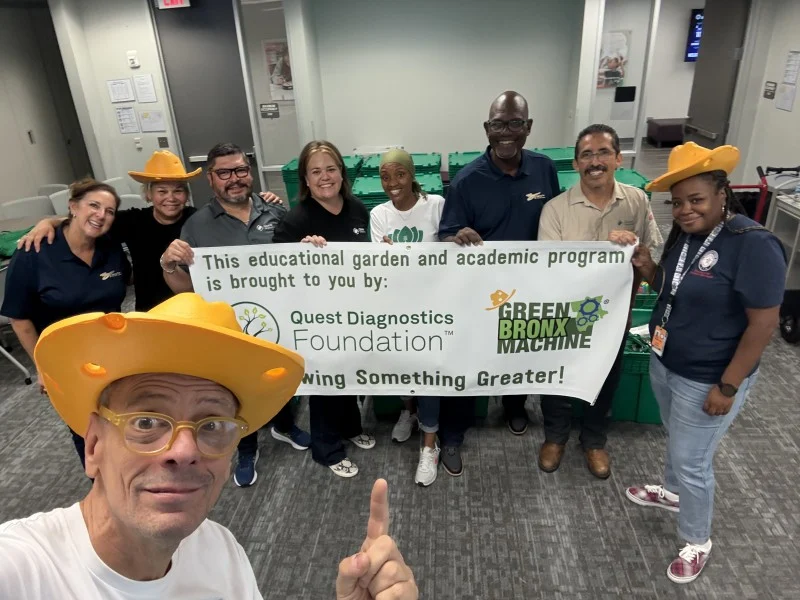
• Quest Diagnostics Foundation helped Green Bronx Machine provide seed to table curriculum and programming to 80 schools nationally.
• Partnerships with organizations like Southwest Foodservice Excellence (SFE) and Sodexo have allowed Green Bronx Machine to integrate their “edible classroom” harvest directly into school cafeterias.
• High-profile partnerships with the New York Yankees and Gotham Greens provide massive visibility, proving that the program is a prestigious and high-value social impact investment for iconic brands.
3. Institutionalize Professional Development
Green Bronx Machine aligned with State University of New York (SUNY) and the NYC Department of Education to offer professional learning credits to teachers who train in its curriculum. This institutional buy-in ensures that the program is seen as a core academic necessity. As Ana Christina Garcia of Sloan Kettering (and Green Bronx Machine board member) noted, “Green Bronx Machine capitalizes on community assets and unlocks the potential, desire and passion that children, principals and teachers already have.”
Spotlight: “Generation Growth”
The award-winning documentary Generation Growth celebrates Green Bronx Machine’s classroom success. Green Bronx Machine uses the film as:
• Cinematic Advocacy: The film travels to corporations, community centers, and film festivals to “coalesce” an array of public, private, and policy partners.
• Student Commitments: The Generation Growth Healthy Student Pledge has garnered over 50,000 commitments from students and families, offering actionable steps that everyone, everywhere can achieve.
• Compelling Storytelling: The film dem-onstrates that this turn-key solution is not dependent on one man’s energy—it has grown into a pedagogical movement that invites all to participate.
Lessons Learned Over 15 Years
Green Bronx Machine has spent the last decade and a half learning that growing a movement requires as much maintenance as growing a crop.
Lesson #1: Dropping a high-tech aeroponic tower into a school isn’t enough.
Solution: Green Bronx Machine evolved from a technology provider to a curriculum-first organization. They realized that its value isn’t the plastic tower; it’s the teacher training and the scaffolded lesson plans. Success is now measured not by how many towers are installed, but by how deeply the “seed-to-table” philosophy and lessons are woven into a school’s daily schedule.
Lesson #2: Navigating the “silo” effect in schools that prioritize standardized testing.
Solution: Green Bronx Machine learned to speak the language of the bureaucracy. By proving that their program directly leads to a 45% increase in science scores and a 50% reduction in behavioral incidents, it transformed urban farming from a “nice-to-have” elective into a vital academic intervention. They learned that to change a school, you must prove that a healthy student is a high-performing student.
Lesson #3: Overcoming deep-seated (and justified) skepticism.
Solution: Authenticity is the only currency that matters. Green Bronx Machine succeeded because it was born of the community, not imposed upon it. By hiring local graduates and keeping the National Health, Wellness, and Learning Center open on weekends for families and seniors, they proved they were a perma-nent fixture, not a passing trend.
Conclusion: Growing Something Greater
Through 15 years of radical success, Green Bronx Machine has proven that when you give a child a seed, you aren’t just teaching them how to grow a vegetable. You are teaching them that they have the power to grow their own future. From the streets of the Bronx to the mountains of West Virginia and from suburban Ohio to the deserts of Dubai, the message remains the same: together we can do this.
As New York State Education Commissioner Betty A. Rosa recently said, “The Green Bronx Machine is the bedrock upon which we can build a brighter tomorrow for our students, nourishing young minds with fresh, wholesome foods grown in their own communities. Green Bronx Machine prepares our children for careers and civic life, teaching them to be resilient and resourceful leaders. [It is] a model that is truly growing something greater in the Bronx: hope, growth, and endless possibility.”